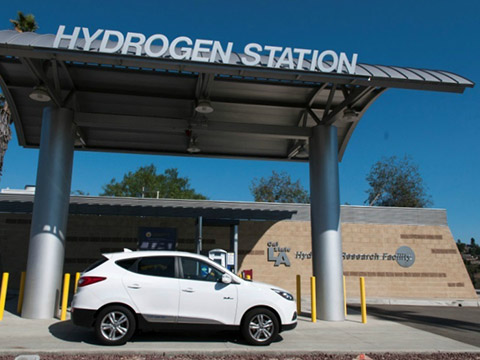
In 2013, auto manufacturers started announcing fuel cell electric vehicle (FCEV) commercialization plans. Since then, Toyota, Hyundai, General Motors, Honda, Mercedes/Daimler, and others have all committed to putting FCEVs on the road, some as early as the 2015–2017 timeframe. As states with zero-emissions vehicle programs prepare for commercial deployment of FCEVs, investors, regulatory bodies, and engineering design firms will need support in developing cost-effective hydrogen fueling infrastructure. And this is only the beginning. BoMax Hydrogen make setting up and maintaing these fueling centers easy and safe. No big trucks to bring in the replacement hydrogen. Rather BoMax will create the hydrogen onsite.
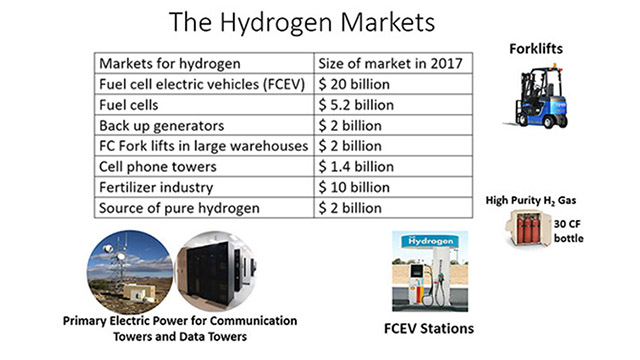
Another area is the use of such fuel to power forklifts. Forklifts are the muscle behind warehousing, and they are everywhere. Most forklifts run on either battery or propane, and both have disadvantages. This is where BoMax Hydrogen can come into play. By being able to produce hydrogen onsite, the forklift powered by hydrgen-run fuel cells can easily be refueled. Hydrogen does not need to be delivered and the lifts experience little downtime and produce no carbon footprint.