BoMax Technology Overview
BoMax utilizes visible light to provide a source of electrons - no rare metals are used such as platinum, and little or no electricity is required from the grid. BoMax hydrogen is pure and will not require costly filtering, lowering cost over traditional systems that if left unfiltered may damage expensive fuel cell catalysts. As a scalable self-contained energy production system, it can be deployed for most any hydrogen energy source use anywhere in the world.
The hydrogen generation system used by BoMax is complex with components that require tuning to establish the best cooperative interaction for producing hydrogen rates of sufficient rate and duration for a marketable hydrogen production system. The system must have a light source to work. Visible light and the secondary components facilitate the process to allow for adequate electron transfer to the active site. The FeMo-co accepts the electrons from CdSe and combines with the protons to form hydrogen which bubbles out of solution.
The BoMax System is a green, carbon-free system for renewable energy production at the point of use. With on-site production of Hydrogen at the point of use, the costly and high pollution transport of fuels on our highways is greatly reduced if not eliminated.
The short video on this page gives a brief overview of this process. Please contact us directly for more information.

Development Activities
-
Phase 1A - 2016 - Completed
Open the BoMax R and D Laboratory
Validate science behind the BoMax hydrogen generation system
Perform cost and energy analysis
-
Phase 1B - 2017-2020 - In Process
Chemistry Optimization Process
To date: Increased hydrogen production rate by a factor of 3150
To date: Extended hydrogen generation duration from 5 to 39 days
To date: Demonstrated reaction’s ability to start and stop for 72 days
Track cost and energy analyses
-
Phase 2A - 2020
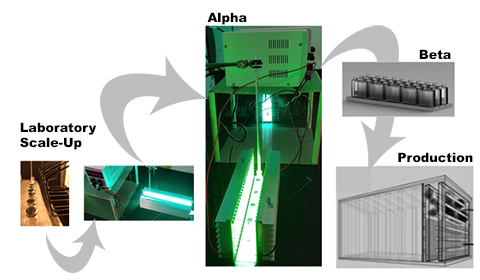
Laboratory scale-up
Regulatory and safety strategy development
Cost Analysis shows hydrogen produced at rates in the lab is competitive with hydrogen sold on the hydrogen highway in California
-
Phase 2B - 2021-2022
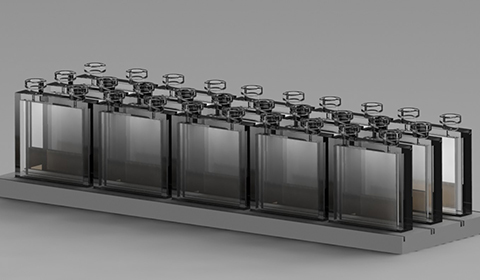
Beta Prototype (Reactor Panel Array)
-
Phase 3
Transition to Manufacturing